* If you’re landing here for the first time, this is the 5th of several posts describing my first visit to Portugal to decide whether I’d want to move here.
If you want to read this section in order, start here: Chegada a Lisboa para explorar
And here’s the beginning of the whole story: Onde esta história começou
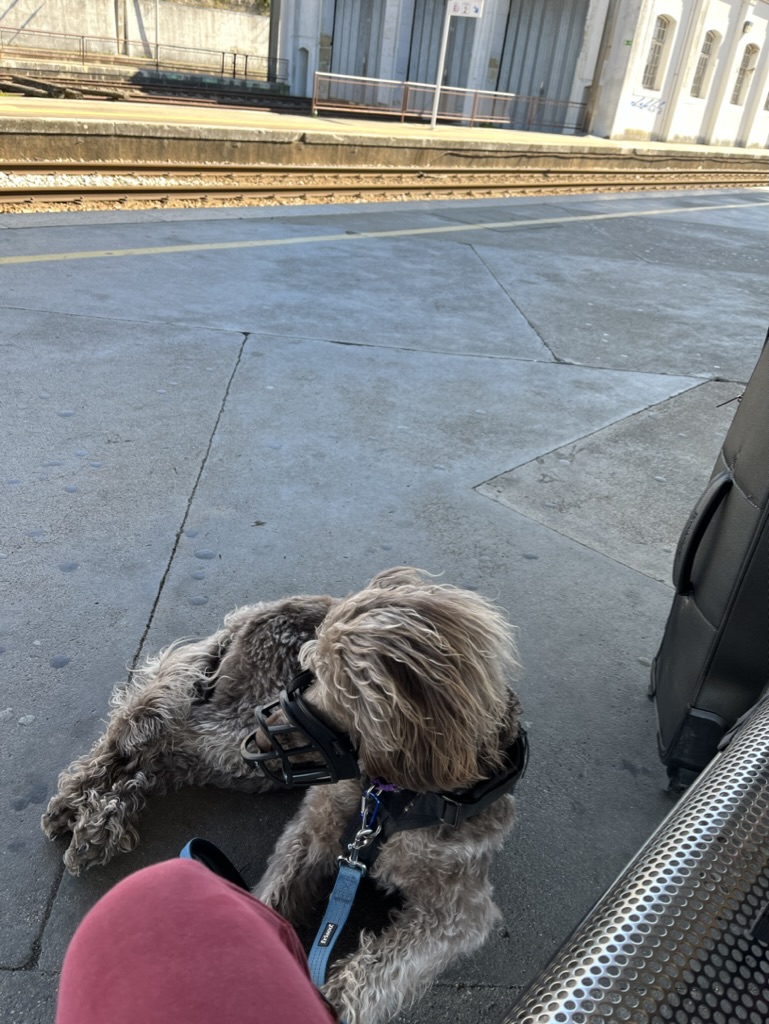
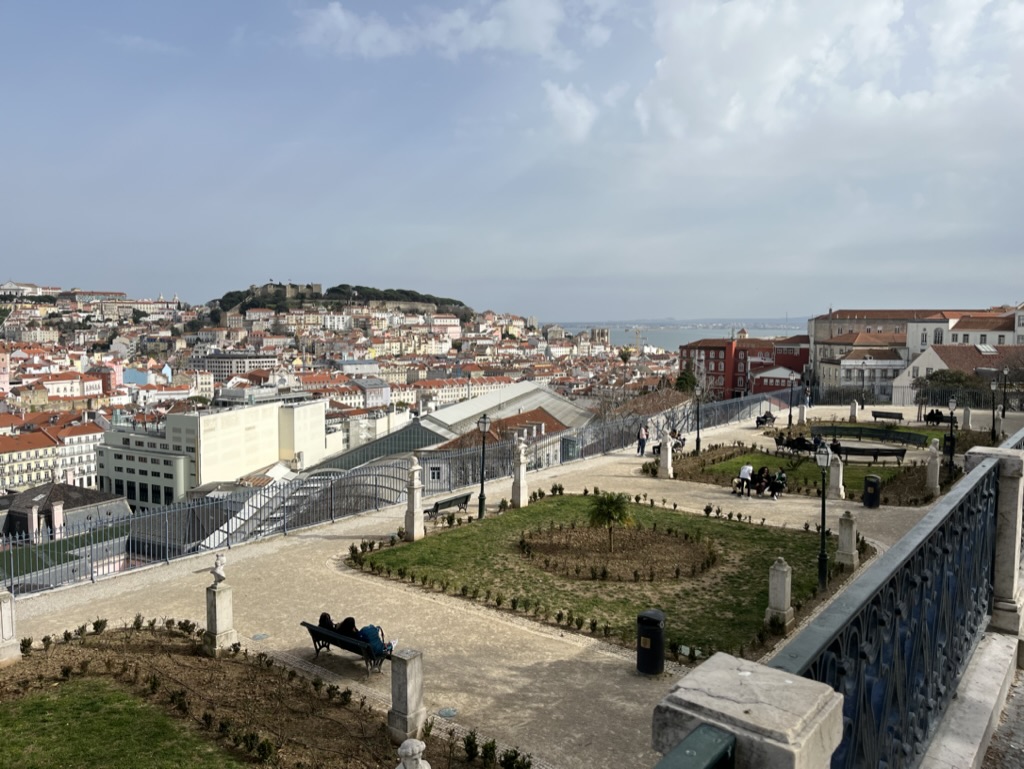
The trip to Setúbal (which is pronounced more like Stúbl) went pretty smoothly, and it wasn’t long before I fell in love!
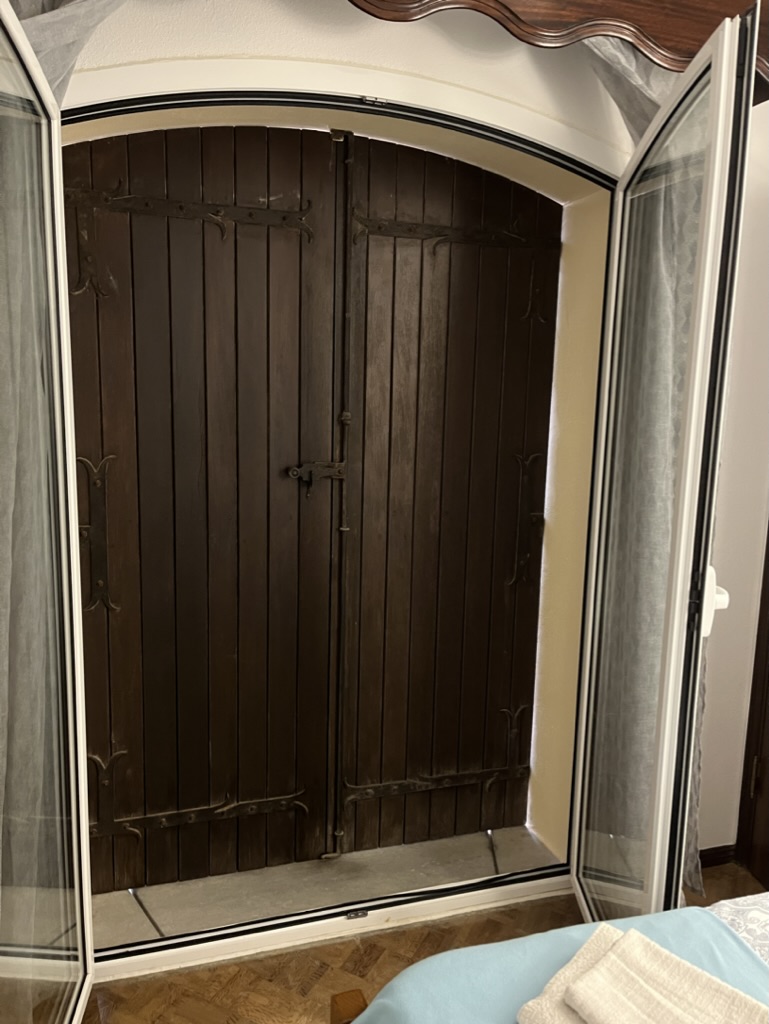
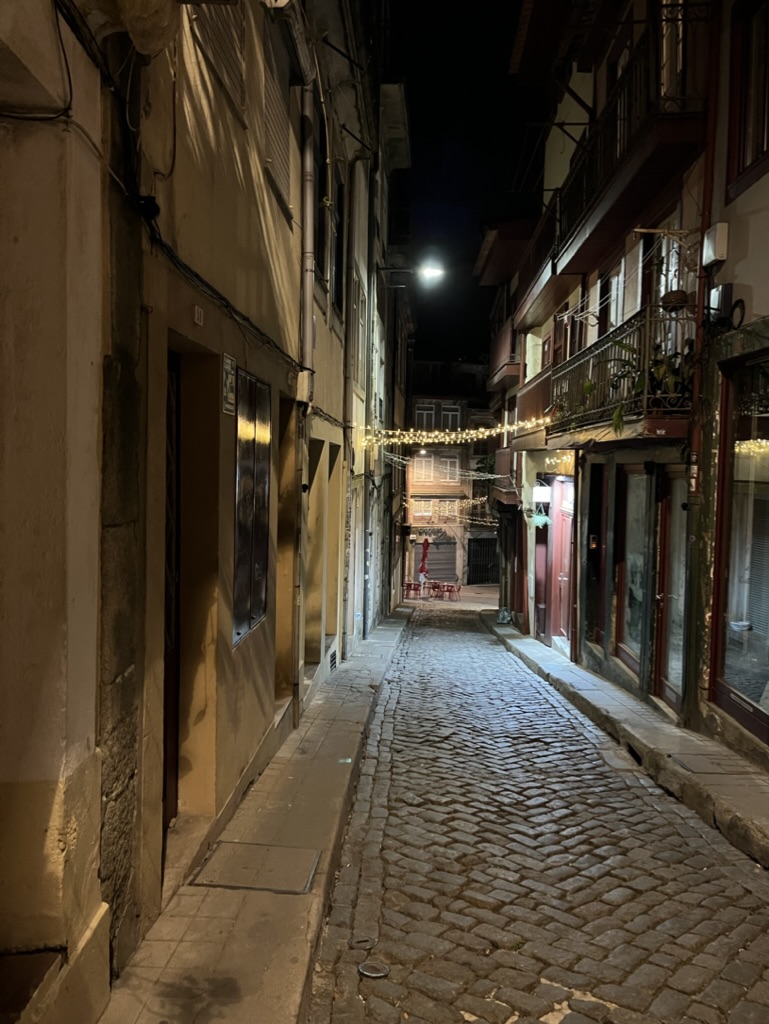
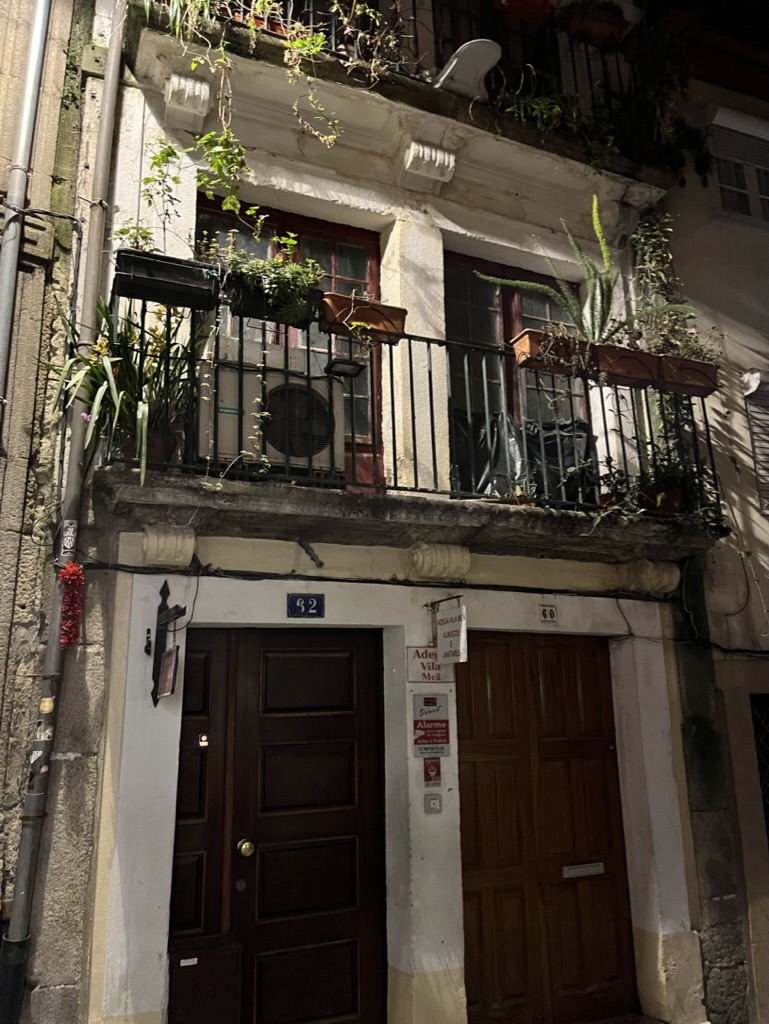
I booked a small apartment in the historic district, which is very cute with a lot of pedestrians-only streets and narrow travessas. Once I got to that area, I was stopping to check the map on my phone practically every 2 minutes, because it felt kind of like a maze!


The host met me at the door, which was super convenient for him because he lives right next door. That worked out because he was entirely respectful and very friendly, and was more present as a host than at any of my other stays on this trip. He reminded me of what airbnb used to be about – actually meeting people and sharing experiences.
Our conversations were challenging (in a good way!) and relied heavily on google translate. He’s from Belgium, so fluent in French, and I think knew some Spanish, but was just learning Portuguese, while I only spoke English, plus the tiny bits of Spanish that I remember from high school. I was very proud of myself when I was able to produce a couple of super-basic sentences here and there that he could actually understand!
Setúbal is a decent sized city, about an hour by train from Lisboa. Compared to São Martinho do Porto, it felt like it has every amenity I would need on any sort of regular basis.
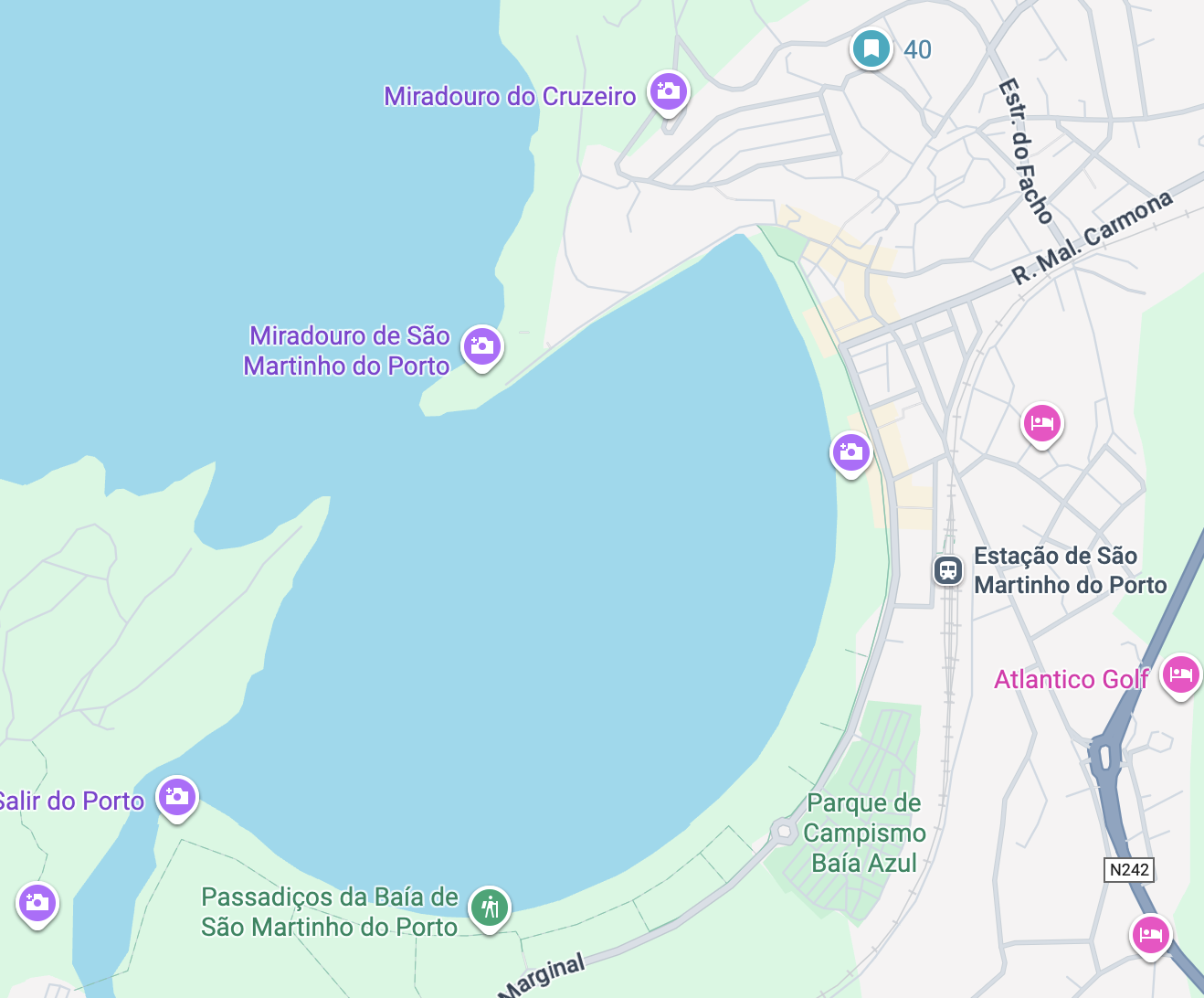
This is the part of town that I spent the vast majority of my time exploring.

There are a lot more residential areas and parks to north and east of this section, but most of the times when I headed out to go more than 15 minutes in any given direction, it was toward the Parque Urbano de Albarquel to walk along the sandy beach.
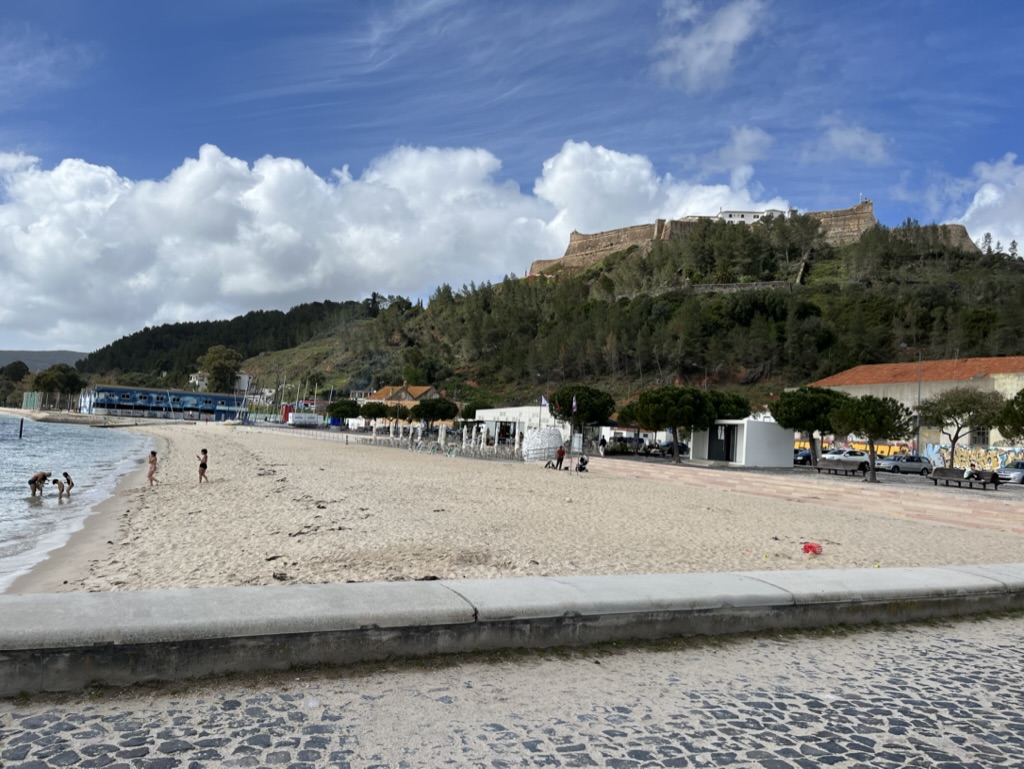
The best part was further to the southwest. As far as I could tell, the end of that slanted wall from the beach up to the sidewalk was the end of the official parque.
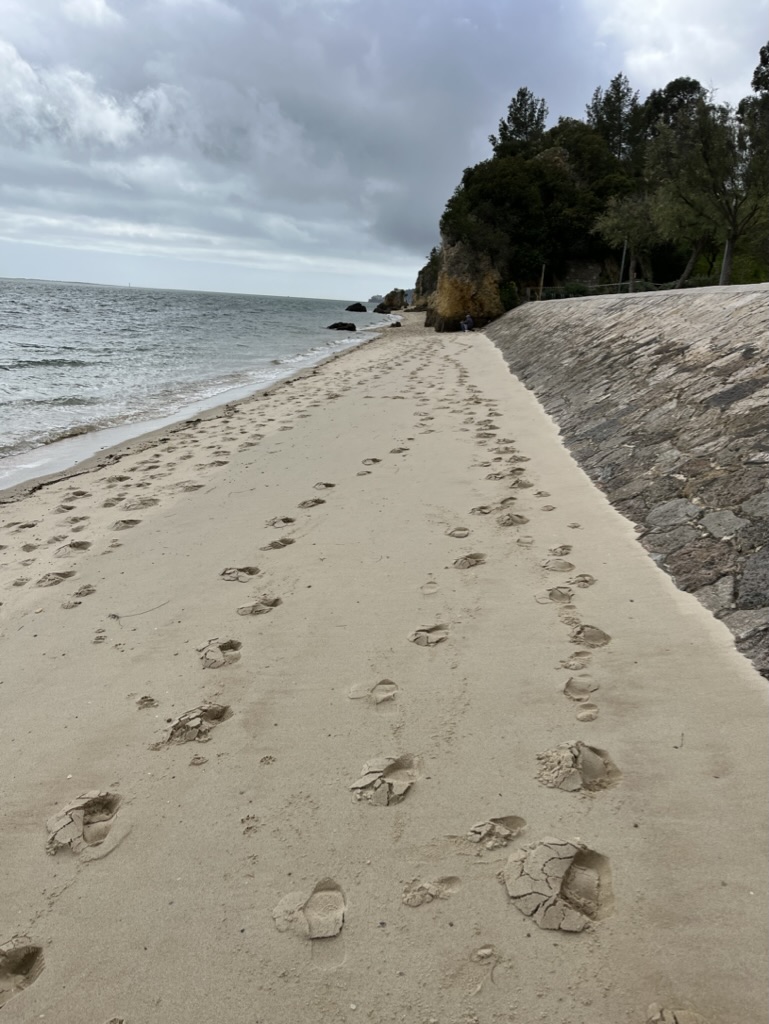
But when the tide is out, you can keep on walking.
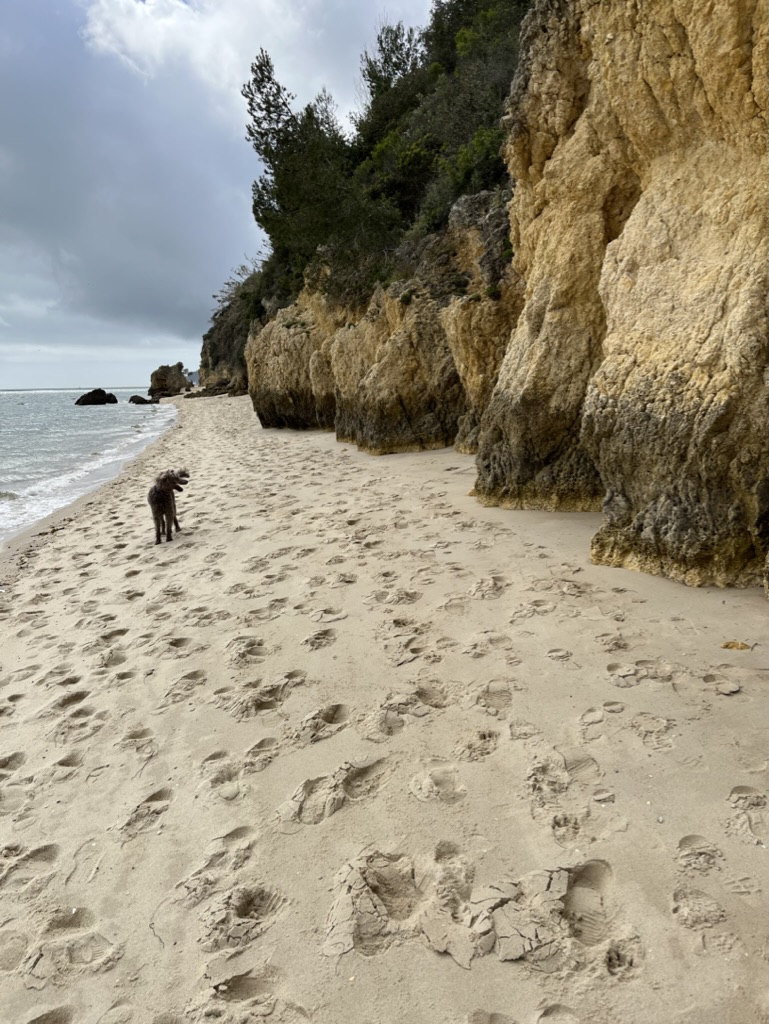
I never got my timing right to check it, but I think that at low tide, you can walk all the way to Praia de Albarquel, at the bottom left of the map above. This seems to be the first place to go underwater as the tide rolls back in! If you zoom in closely enough, you can see a group of people on the trail on the other side of the water – they started wading across in what I thought was really cold water!

And this beach is a big part of why I fell in love.

It was about a 30-40 minute walk from where I was staying to the end of the beach, so I didn’t make it there every day. Most days, though, I made time to go sit by the waterfront in Jardim Engenheiro Luís da Fonseca, which was just like a 6 minute walk from the apartment.

I loved how many other people seemed to be doing the same thing I was – just going to sit by the water and watch the sun set.
I have a truly ridiculous number of photos of dramatic clouds and sunsets taken from this park 😂
Writing this post is making me want to get back to the water!
Another thing I loved in Setúbal was the Mercado do Livramento. After the municipal market in São Martinho do Porto, this seemed HUGE! I didn’t take any photos or videos, but you can find some great photos shared on the google maps page if you want to get a sense of it.
I did take several photos of the stuff I bought there, that now look pretty unimpressive 😂
So this is a loaf of fresh bread, olives, dates, a tomato, broccoli, strawberries, a jar of piri piri (hot sauce), and a pastry that I now recognize as a bolo de berlim. Then, I didn’t know the name but thought it looked yummy! (And it was!)

Again, in hindsight, this seems like a strange thing to be so excited about that I had to take photos 😂
But I had never been to a farmer’s market in the US that was anywhere near this big, with this quality and range of products, and at a price that’s comparable to or lower than grocery store prices. I know it’s a matter of scale and policies in the US, but I associate farmer’s markets with paying twice as much for the same food. It’s often higher quality, but that’s still a barrier.
(And this isn’t “ooh, Portugal is so cheap”, which is offensive. This is a not-yet-well-informed policy critique! I don’t know why the prices for produce in Portuguese markets are comparable to grocery store prices, but I love it. But that’s a whole side rant!)
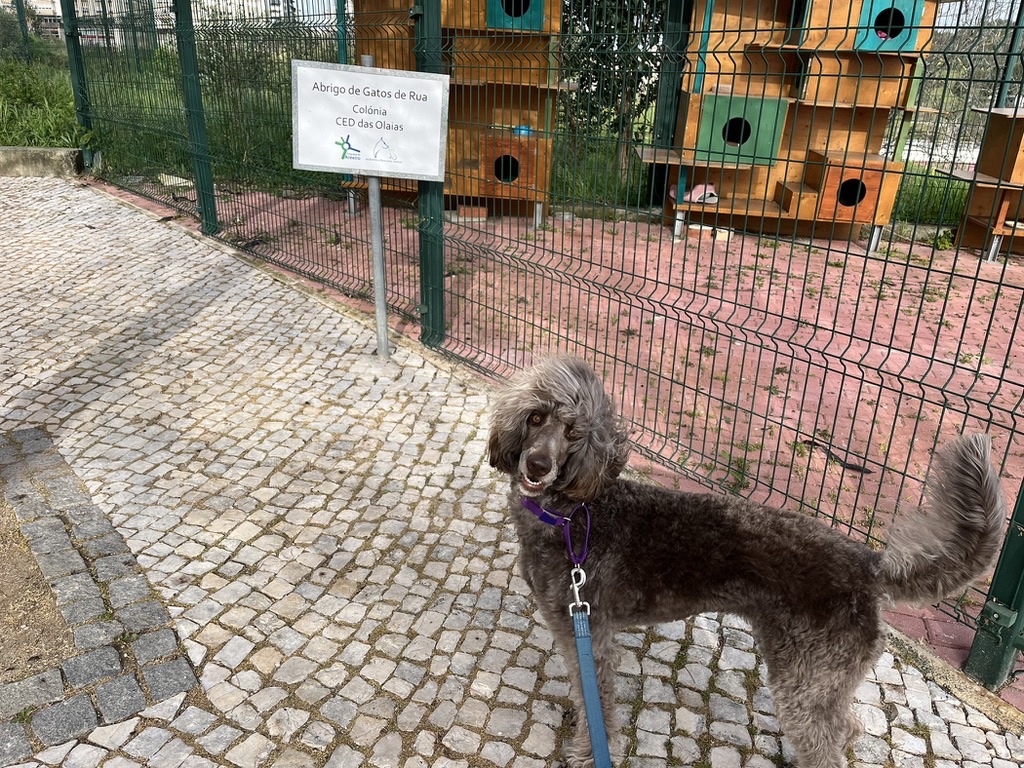
There’s also a ton of public art all around town.


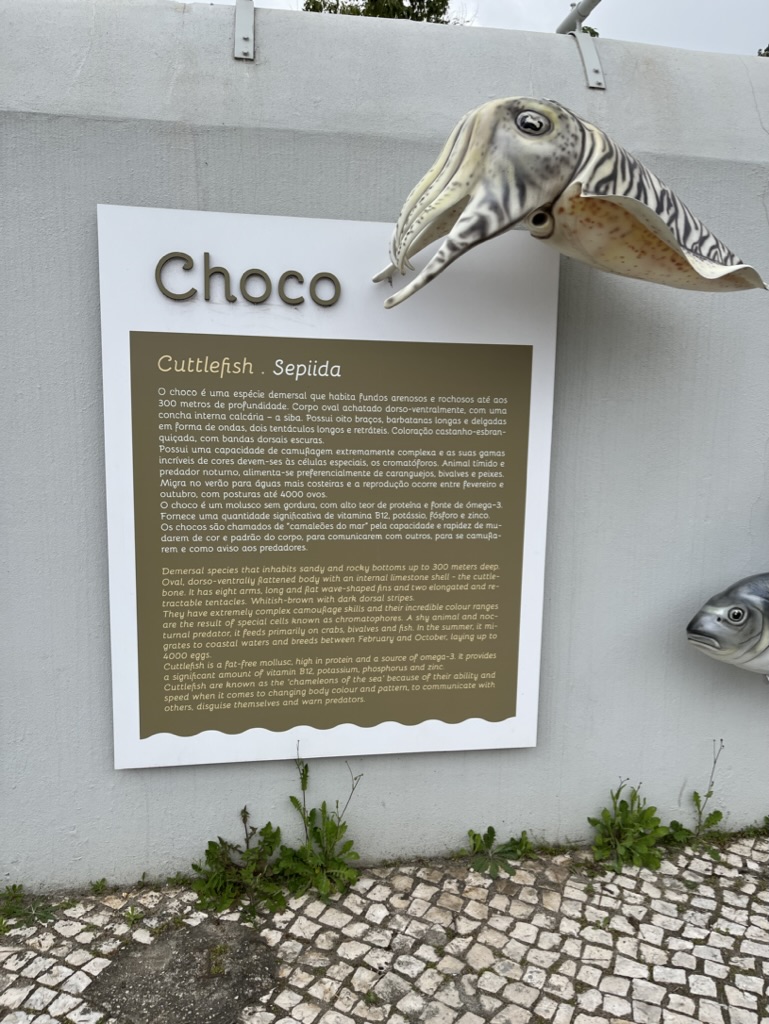
That statue is the choco, or cuttlefish, which seems to be one of their mascots. One of the dishes that Setúbal is known for is choco frito. They cut the meat of the cuttlefish into strips, bread them, fry them, and dip them in mayonnaise. The choco itself doesn’t have a particularly strong flavor, and it’s protein-dense and low fat, at least until you fry it!
The other mascot of the town is the dolphin, or golfinho.

Setúbal is located on an estuary, where the Sado River meets the Atlantic Ocean. And there’s a pod of golfinhos that live there. I heard all about it, but did not go out on the boat tour to see them.

And statues weren’t the only type of public art in town. One drizzly evening, I heard something, and went out to see where the sound was coming from.
A group of older men were huddled together under some umbrellas at one of the restaurants nearby, singing about the spring.
As a side note, I surprised myself when I played this while picking which photos and videos to include here – I actually understand what they’re singing! At the time, I probably would have recognized “primavera” if I had been able to distinguish it as a word. But my brain wasn’t registering that much at that time.
Now, I understand most of it:
Quando chega a primavera, é bonito [can’t quite make that last bit out]
When spring arrives, it’s pretty!
I was originally scheduled to spend a week and two days in Setúbal, but I talked to the host, and the apartment was available for another week.
So I extended my stay! I was there from 13 to 29 March, so just a little over 2 weeks.
Setúbal was the first place I felt like I could love living in. To be fair, Coimbra got kind of short changed by me coming down with covid, and I didn’t give Porto a fair chance. But I really did fall in love with Setúbal.
The airbnb host was fabulous, and if you ever plan to visit Setúbal, I’ll happily share his info! He invited me out to join him and a friend who speaks English for dinner at a place with great choco frito one evening.
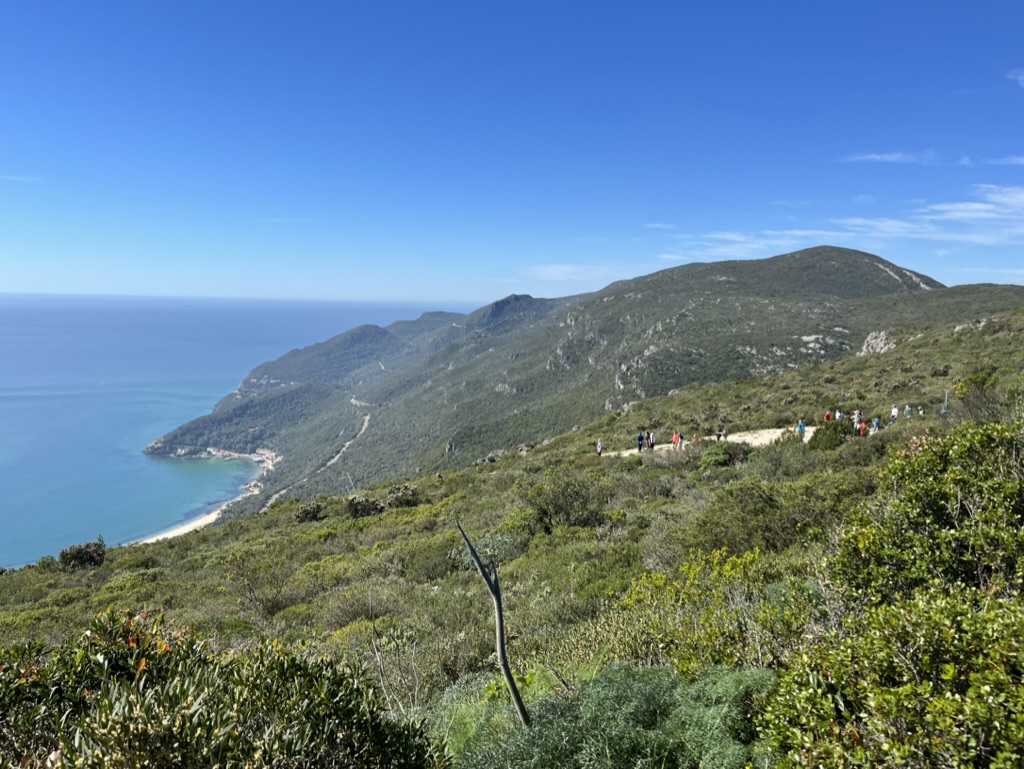
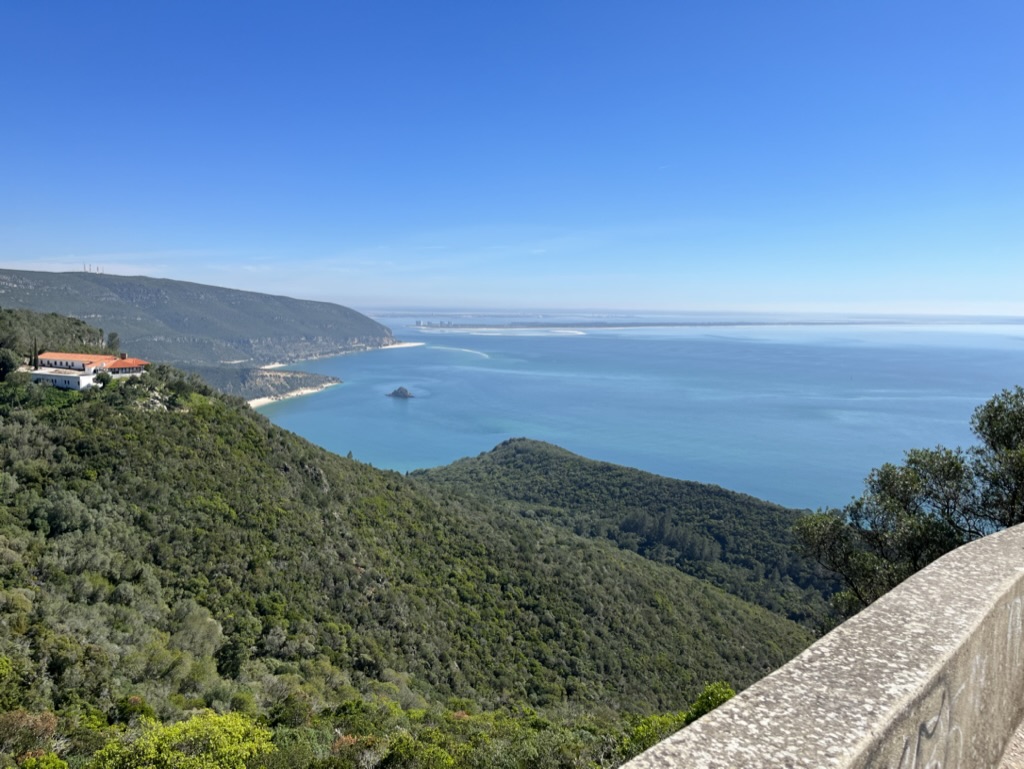
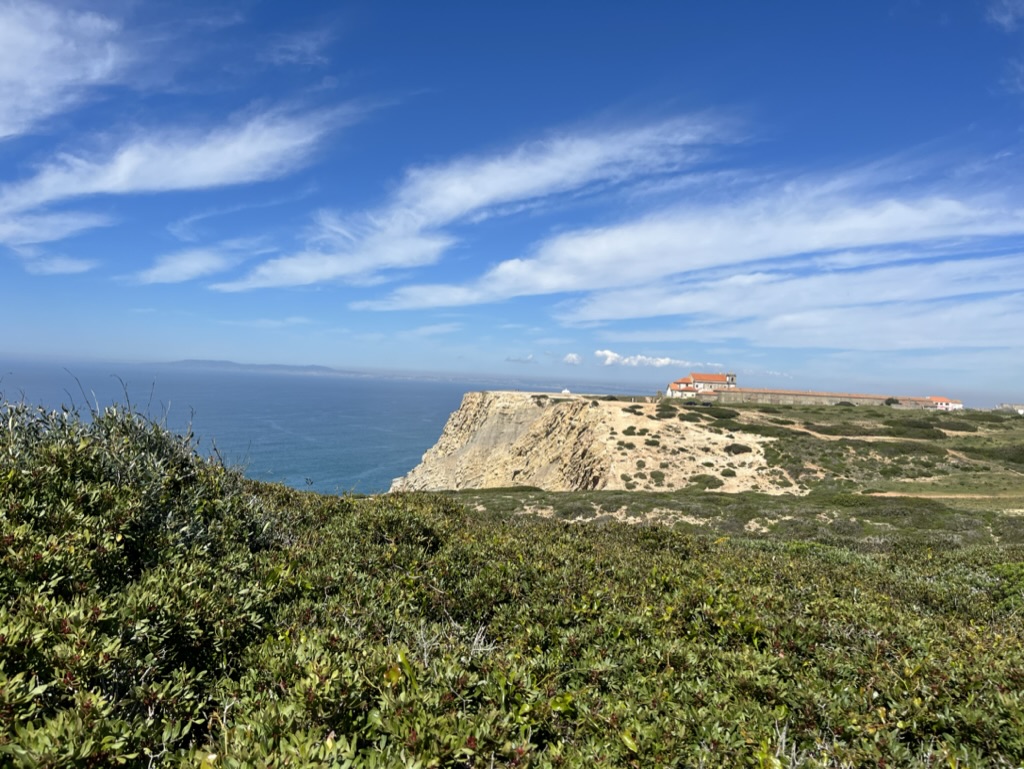
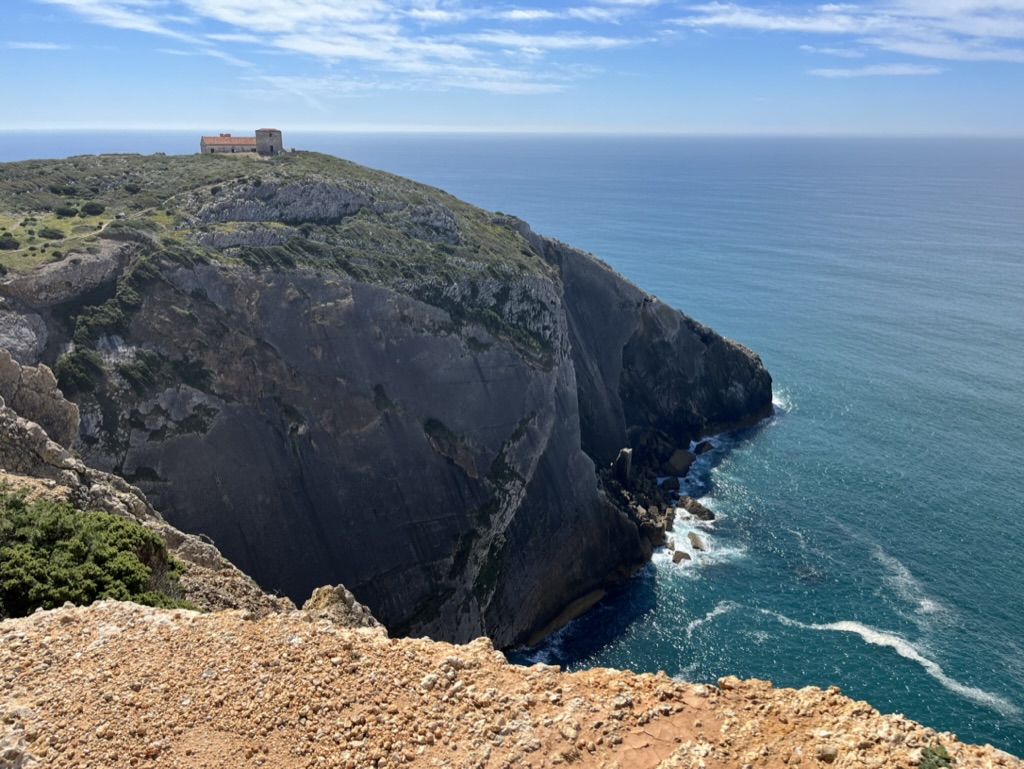
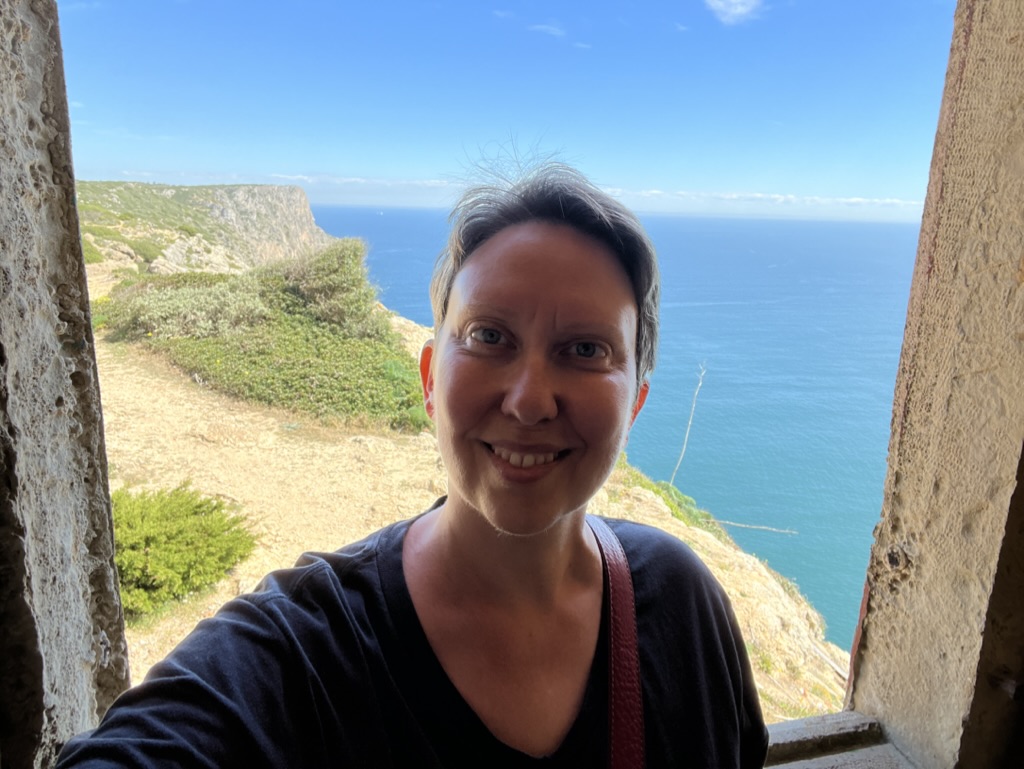
And when he had a day available, he invited me to take a trip out to the Farol do Cabo Espichel, driving through the Parque Natural da Arrábida. Along the way, we stopped (A) at the ruins of a fort, and (B) a scenic viewpoint near Convento de Nossa Senhora da Arrábida.
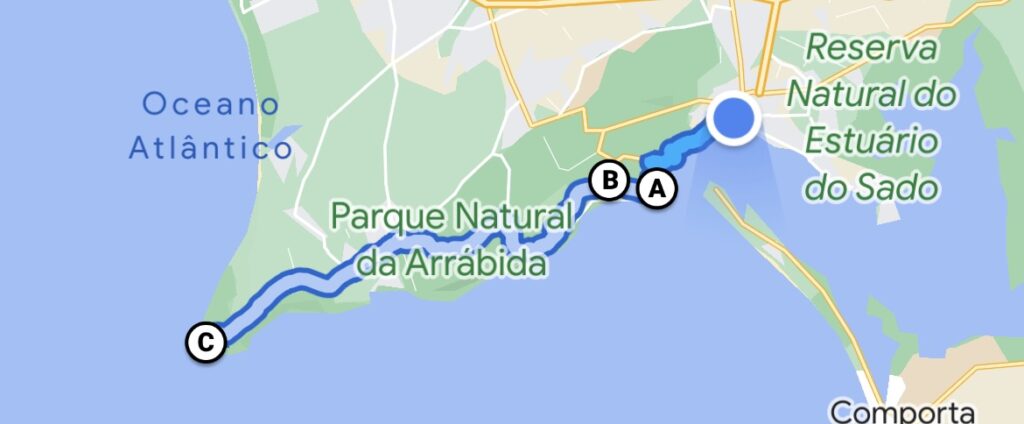
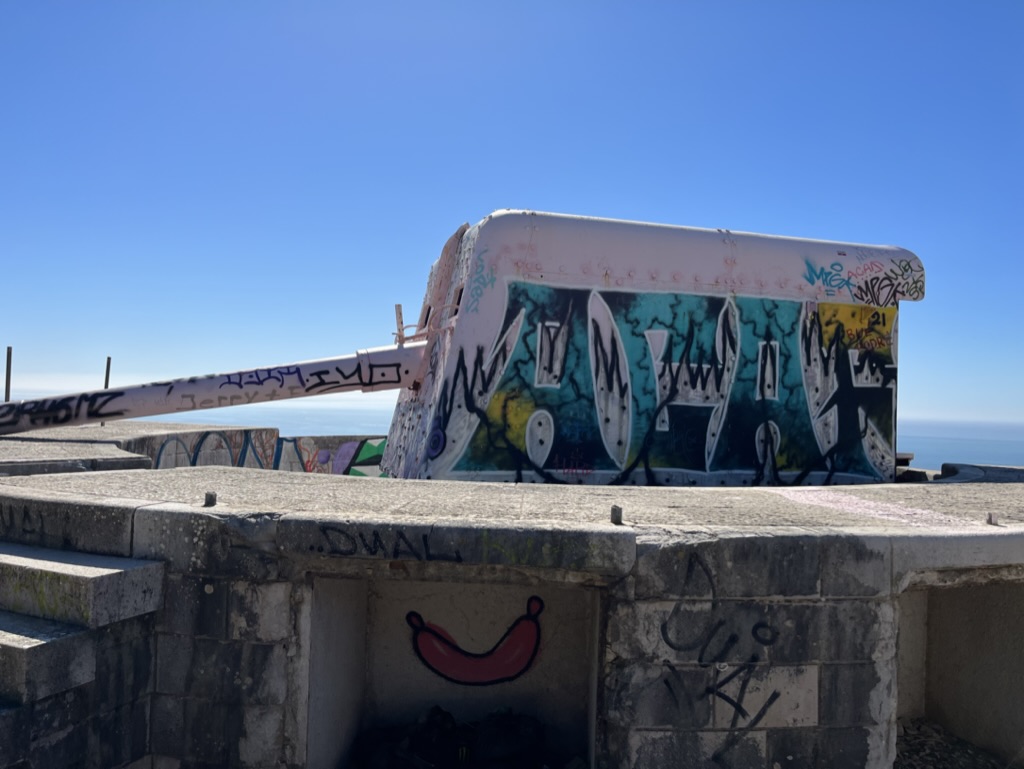
As usual, the views were absolutely stunning. This video is from the first stop, at the 7ª Bataria de costa, the abandoned fort.









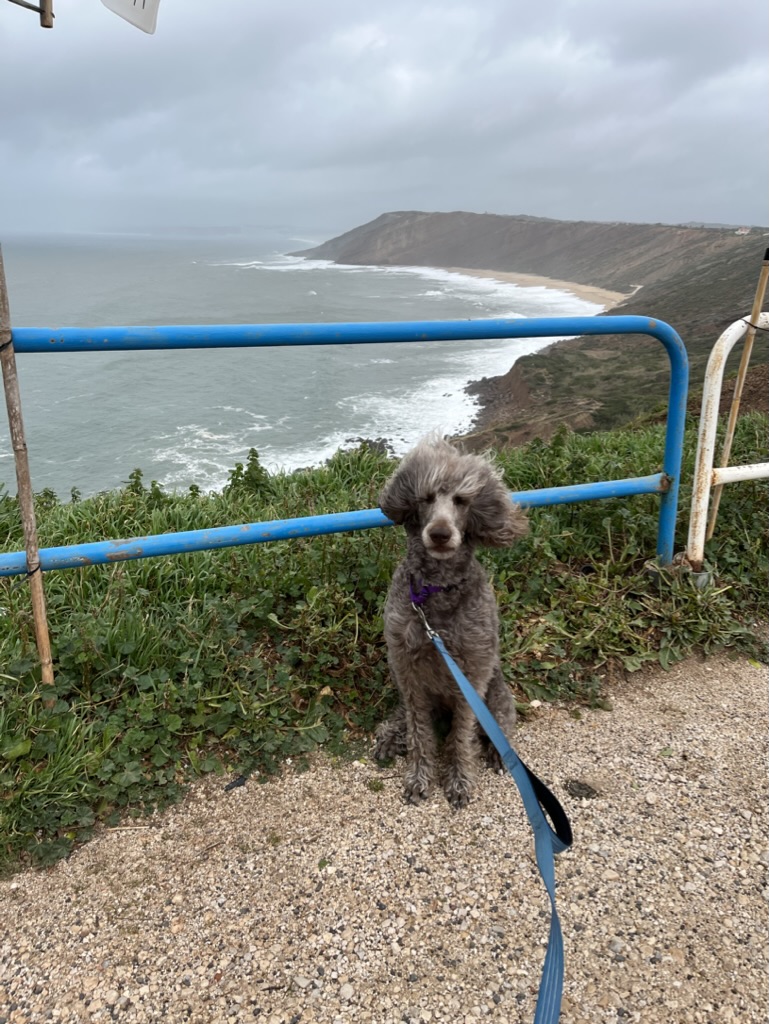
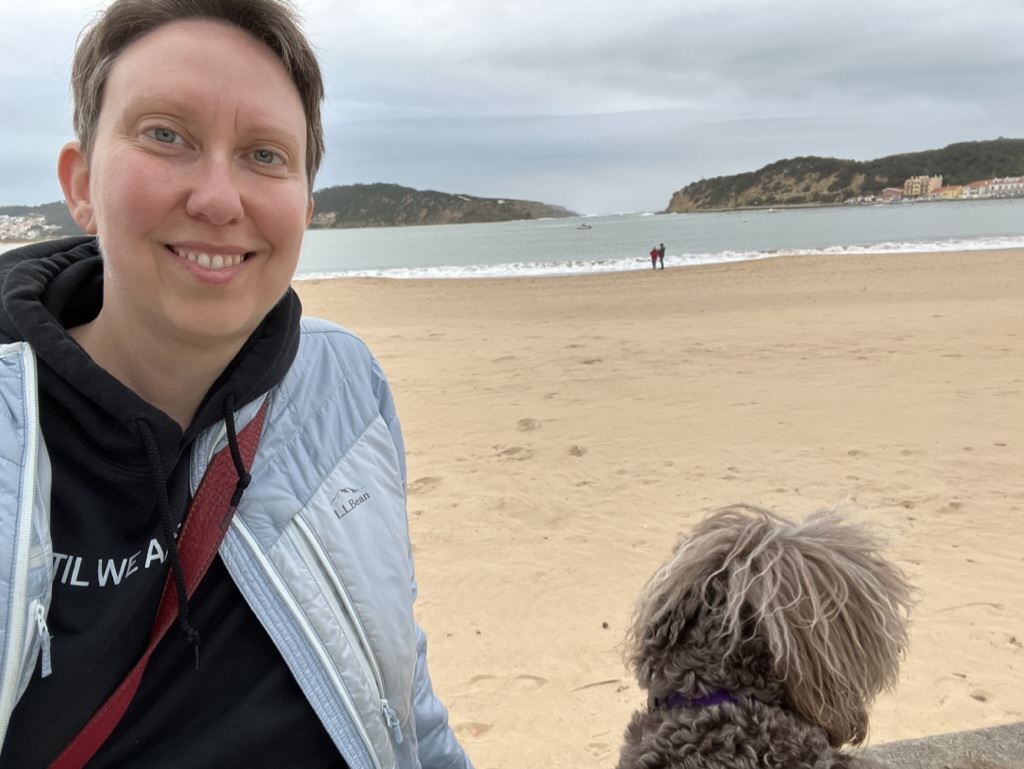
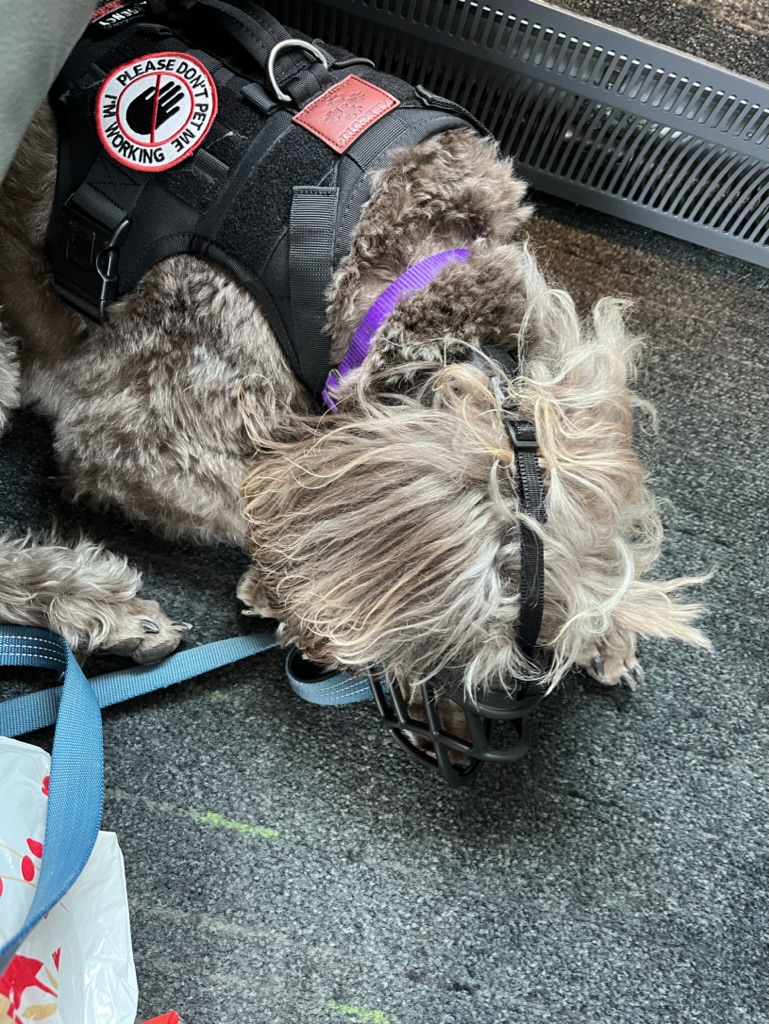
The weather was starting to warm up, and we would be heading south from here, so I found a groomer to take Mocha to while we were there. She did a fabulous job!


At this point, I feel like I’m rambling, even though I have so many more photos I could include! I don’t really want to end this post – it’s bringing back all of the feelings from that time that I don’t really have words for. It just felt right, like I could be really happy here, and those feelings hit as hard as they did because I hadn’t felt that way in a while.
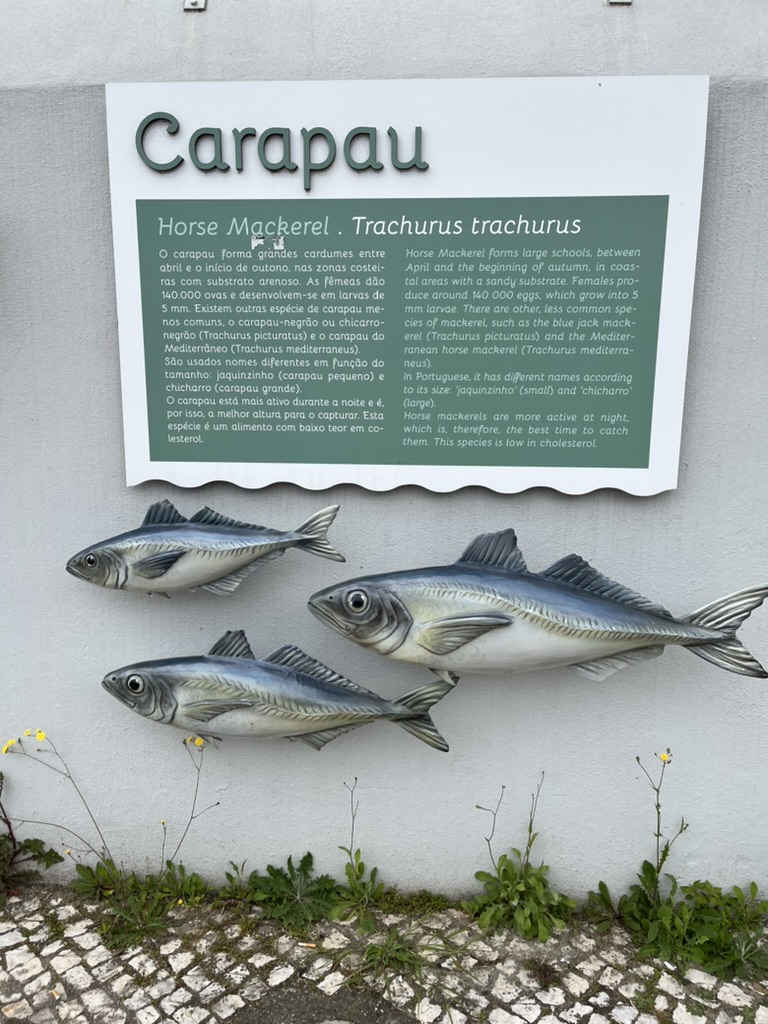
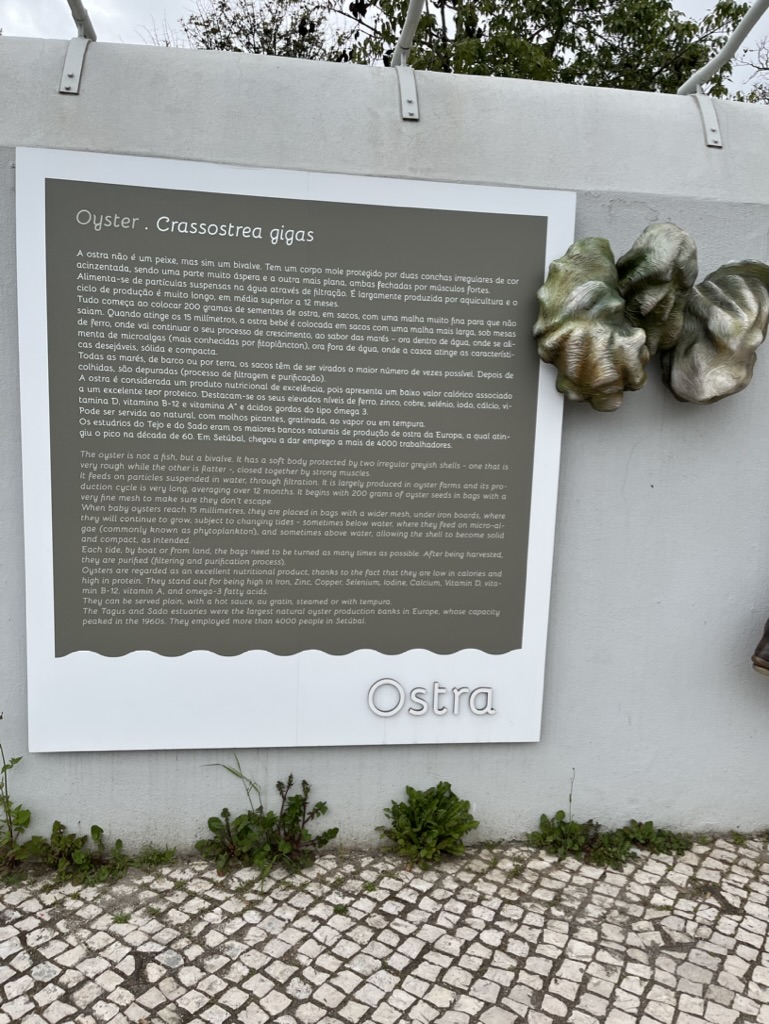
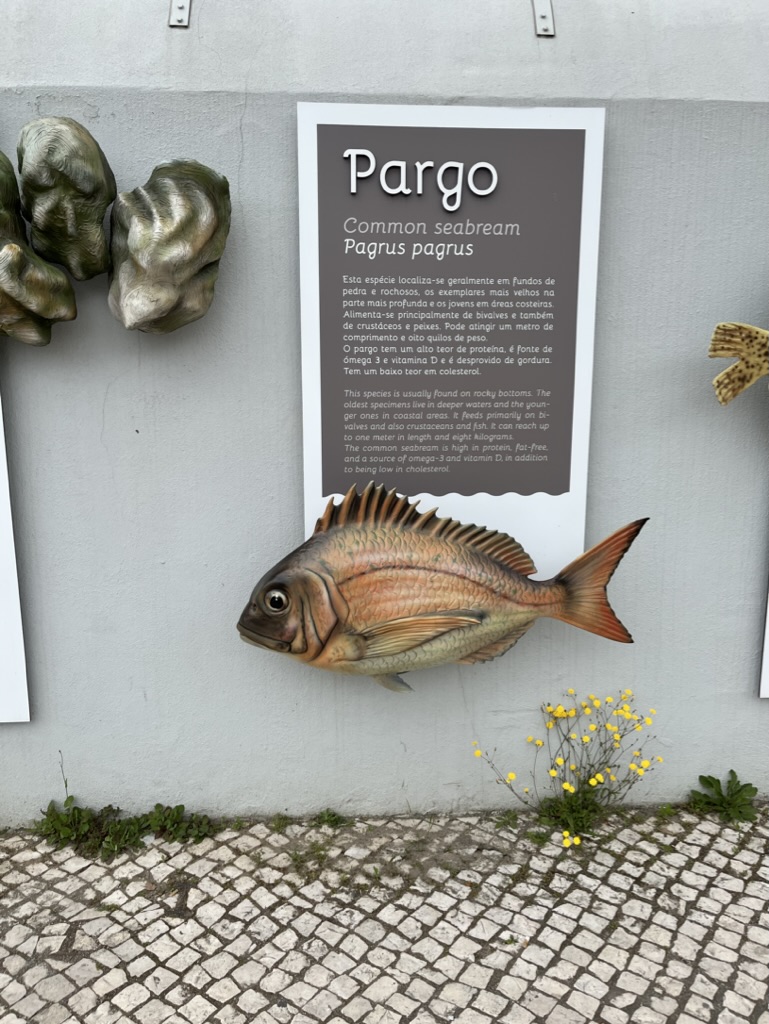
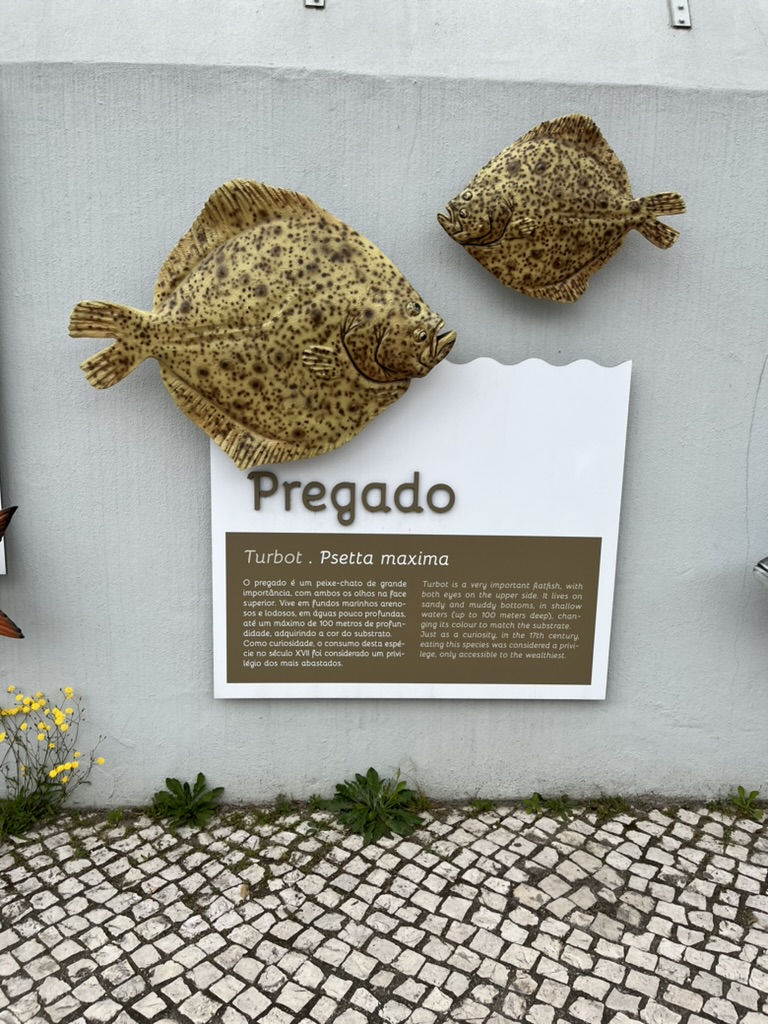
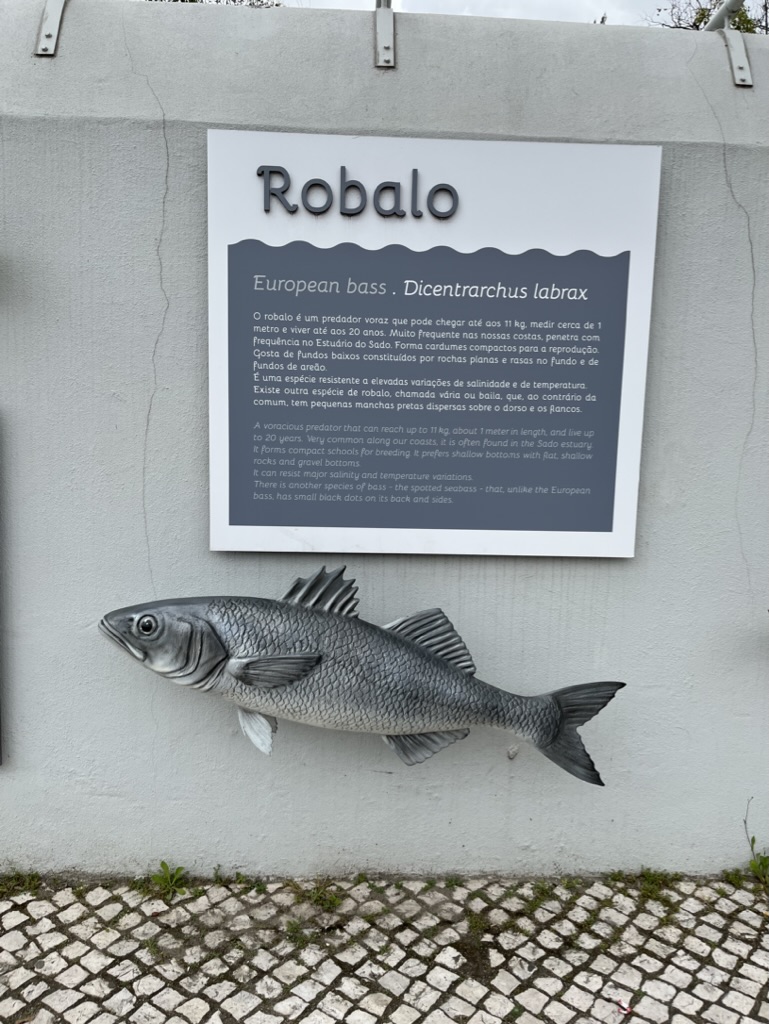
So I’ll wrap up with photos of displays along the wall at the southwest end of the Av. Luisa Todi. The text is in both Portuguese and English, so you can learn a little more about the local fish if you zoom in!