Today I feel like taking a break from the linear story telling to write about beans 😂
When I decided to move to Portugal, I knew my diet would change. I expected to be eating more fresh seafood.
I did not expect to find myself eating so many beans!
It’s not like I never ate beans in the US. I enjoy a good red beans & rice or black beans & rice, but it wasn’t a regular thing.
Feijão means bean. My translation app says beans (plural) translates to feijões, but I don’t think I’ve ever seen that used on a menu or label. From what I can tell, feijão seems to be like rice, in that it refers to the thing in general.
Feijoada is a bean stew, and there are several varieties that show up on “plates of the day” lists at restaurants regularly.
My favorite is feijoada de choco, which is white beans with little cubes of cuttlefish. Recipes vary, but it usually includes slices of carrot, some sausage for flavoring, tomato pulp, and seasonings. Sometimes you get a whole, unpeeled shrimp or two on top.
Feijoada á transmontana is another popular one, but I haven’t had the nerve to try it yet. That’s a bean stew with a variety of meats – sausages and various bits that my white suburban Midwest US childhood did not prepare me to find appetizing, like pig ears and feet! And I have to admit that I don’t really enjoy most of the Portuguese sausages I’ve had slices of in different dishes, so I’ve passed on this feijoada so far.
Then we have the feijoada Brasileiro. No qualifier means that it’s black beans and meat, including bits like pig ears. But feijoada Brasileiro vegana is also pretty popular and yummy!
And then there are the soups.
Soup is apparently an important part of getting your veggies here in Portugal, and it’s not uncommon for them to include beans.
As I’ve settled in here, I’ve been getting more comfortable with cooking. I used to completely hate cooking.
But fresh ingredients are just so readily accessible here! When I decide I want to cook something, I either walk like 4 minutes to the municipal market, 5 minutes to the produce shop down the block, or 6 minutes to my choice of two grocery stores (Pingo Doce or Continente).
In Atlanta, getting groceries meant driving somewhere. I lived in a gentrifying (not gentrified) part of town. The two closest grocery stores treated everyone who walks in like a suspected criminal and never had more than 1-2 registers open, no matter how long the lines got.
(To be fair to Kroger, one of those locations had to shut down for a while a few years ago because someone stole their electrical wiring for the copper. And while I was looking for that news story, I found out that someone shot and robbed an armored truck driver in front of that same store just a couple of months ago! So crime is a legit concern in the area. But I still think that adding more staffing is a better response to regular shoplifting than all the nonsense that Kroger has chosen instead.)
And it was about a 10 minute drive to either of those options.
So I’d usually make the 15-20 min drive to the nearest Publix instead.
Now I can get to the market, get what I need, and get back home in less time than it used to take to just get TO the grocery store!
And, on top of that, either EU or Portuguese food policy is just different. I’m assuming it’s that they don’t subsidize hyper-processed foods the way the US does, but I can buy a kilo of fresh tomatoes at the market for less than I can buy a can of diced tomatoes at the grocery store.
As I’ve leaned into cooking at home more, and cooking more from scratch, I’ve finally learned to cook beans from dried.
I know, that’s something a lot of people grow up doing, and I’m in my mid 40s just figuring that out! In my defense, I was raised by a single dad who didn’t know much more than how to grill meat and cook an omelet when he got custody of us, and who worked manual labor jobs, so didn’t have the energy to learn much.
I’ve had to figure out everything I know about cooking on my own, and didn’t have much incentive to learn to cook beans from dried until now.
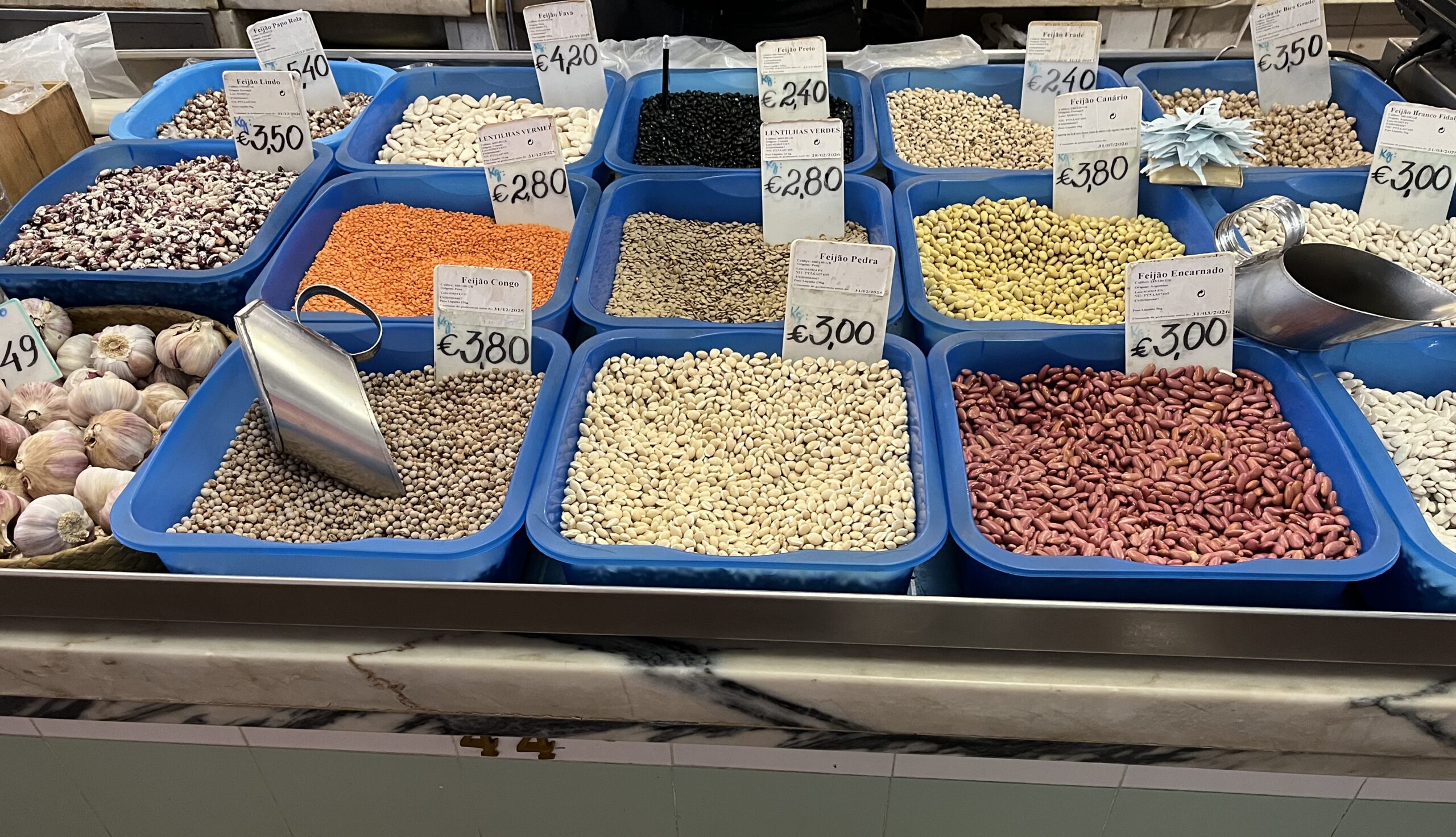
There are at least three stalls at the market that specialize in dried goods, including several types of beans I had never heard of before!
Here we have butter beans, several varieties of white beans, catarino beans, red beans, black eyed peas, chickpeas, and canary beans! I’ve never even heard of canary beans before! I was really disappointed to learn that they lose that vibrant yellow color by the time they’re cooked.
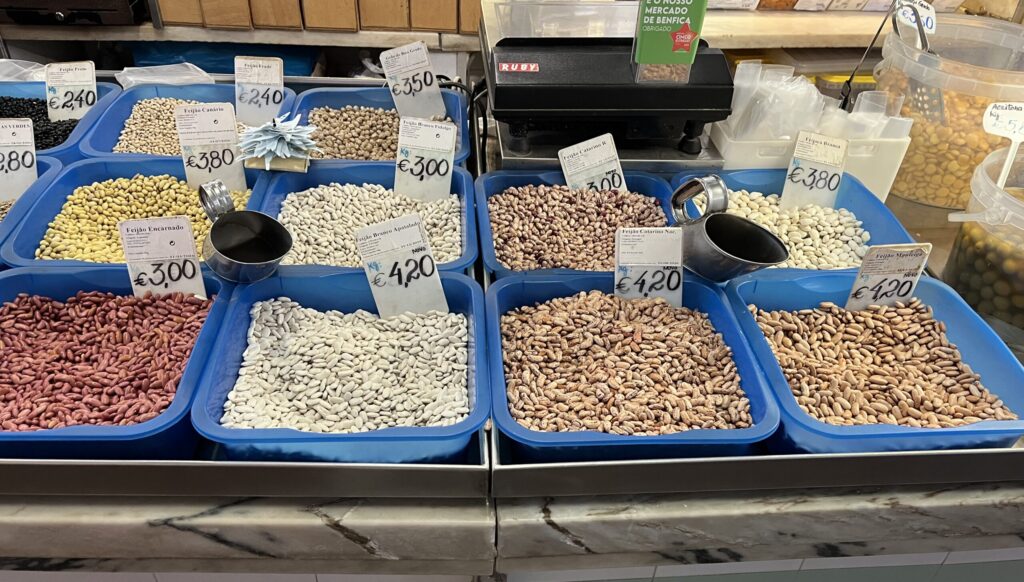
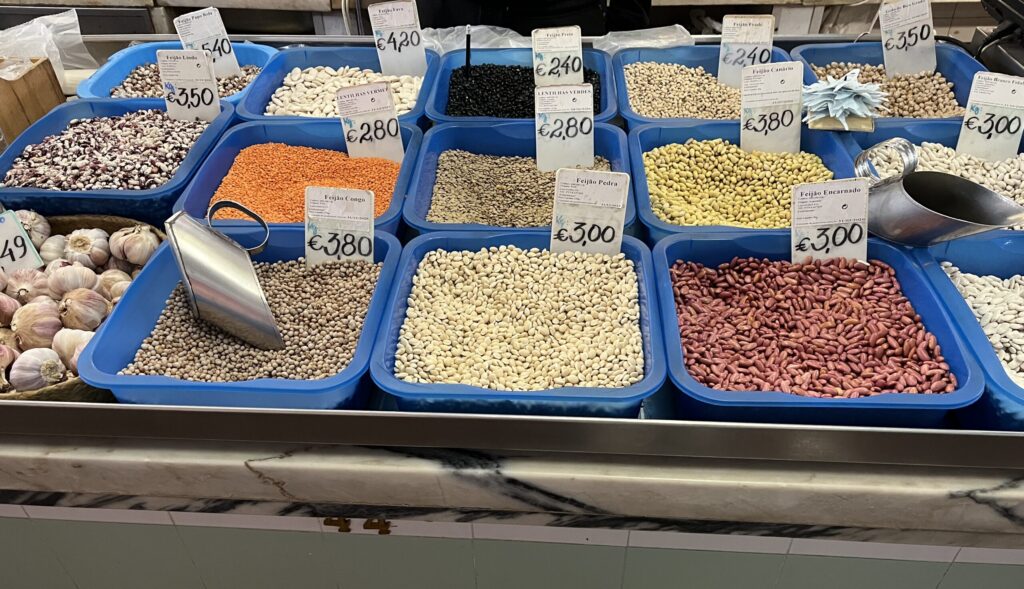
There’s some overlap on the shot here. This view adds black beans, red and green lentils, fava beans, Congo beans, stone beans, feijão papo rola (no idea what that translates to), and beautiful beans (feijão lindo)!
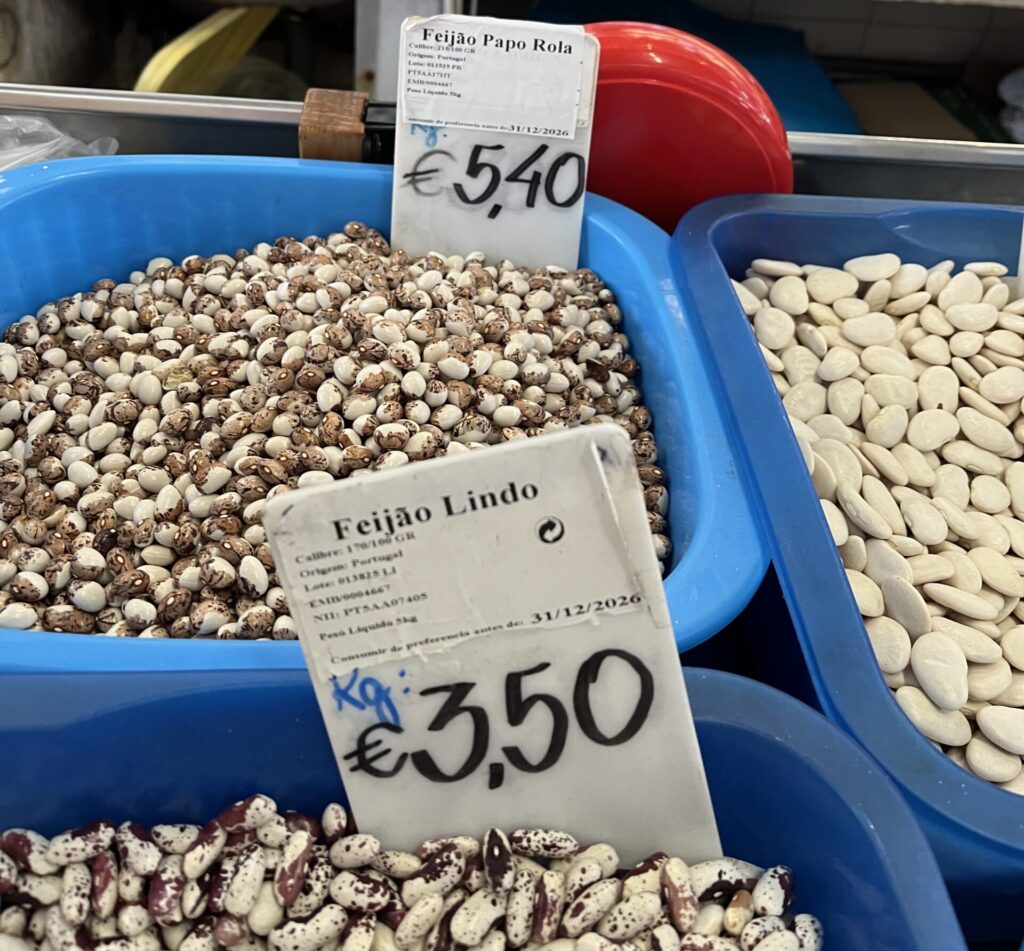
And a closer view of the feijão papo rola and feijão lindo:
I’m not surprised by the fact that there are so many varieties of beans beyond what I’ve ever seen in grocery stores, but I had to learn how to cook them so I could try the new varieties!
So for the past few weeks, I’ve gotten into a habit of making a big pot of some sort of bean soup about once a week, and having that for dinner all week. This week it’s feijão lindo with cubes of sweet potato and couve (not sure if it’s kale, collards, or some other leaf that looks similar!).
This is just one of many small things that have surprised me since moving here!